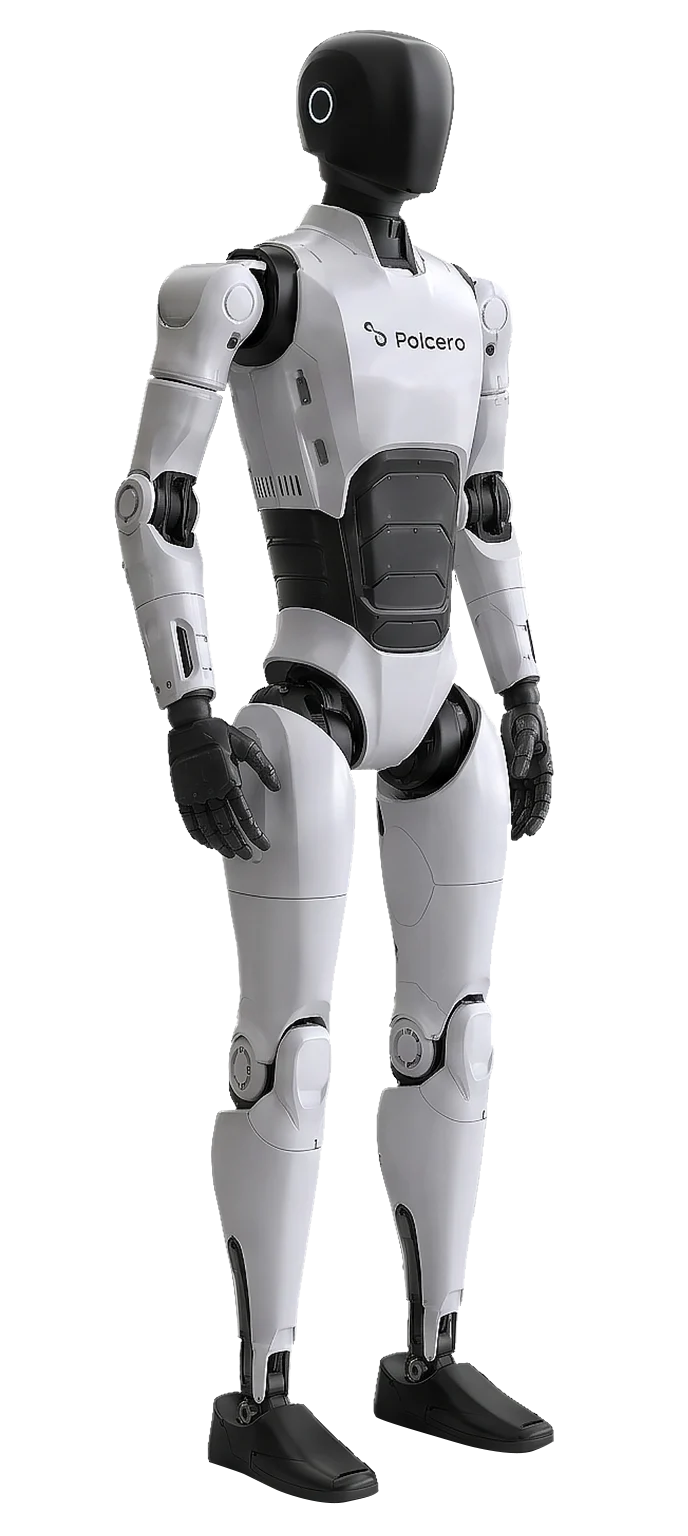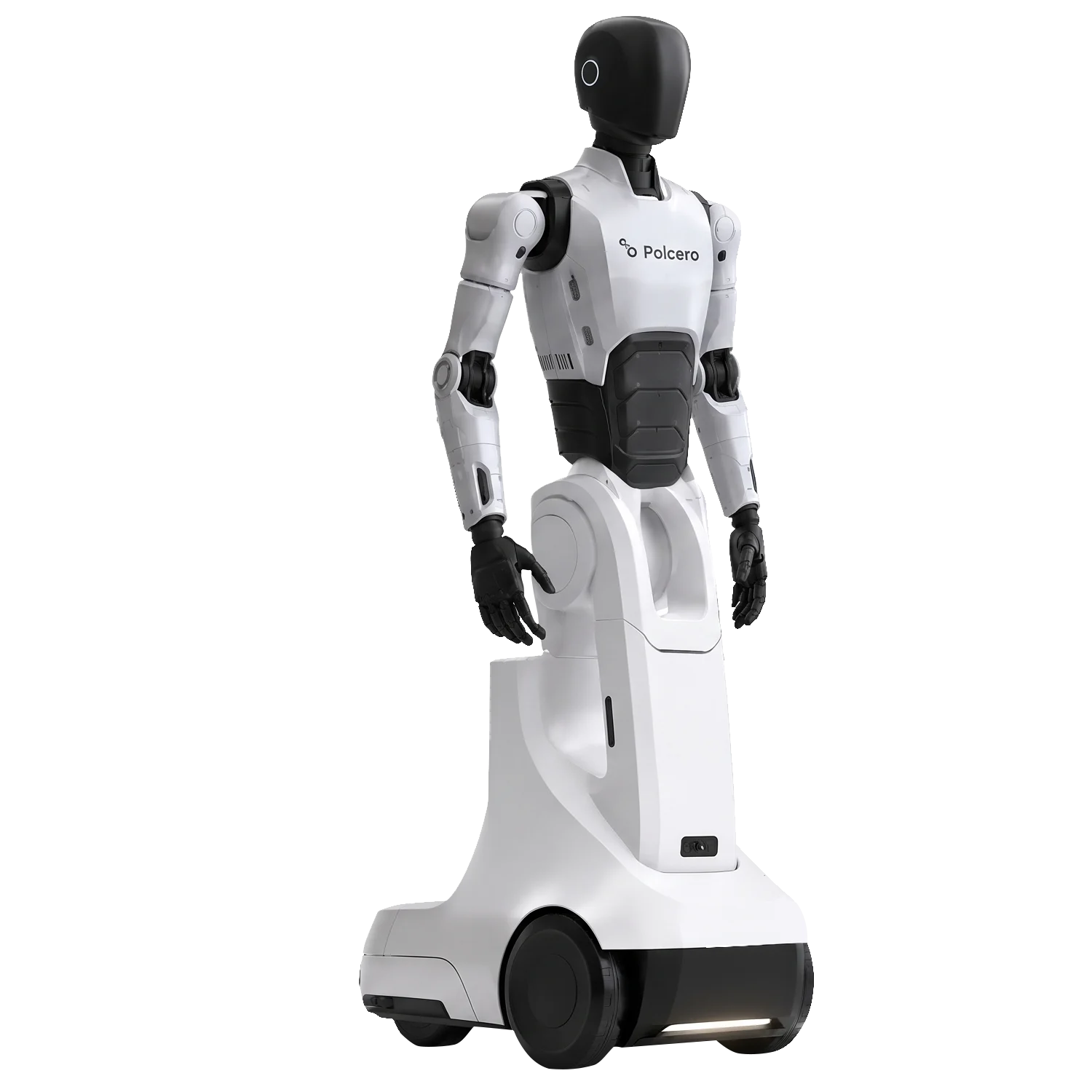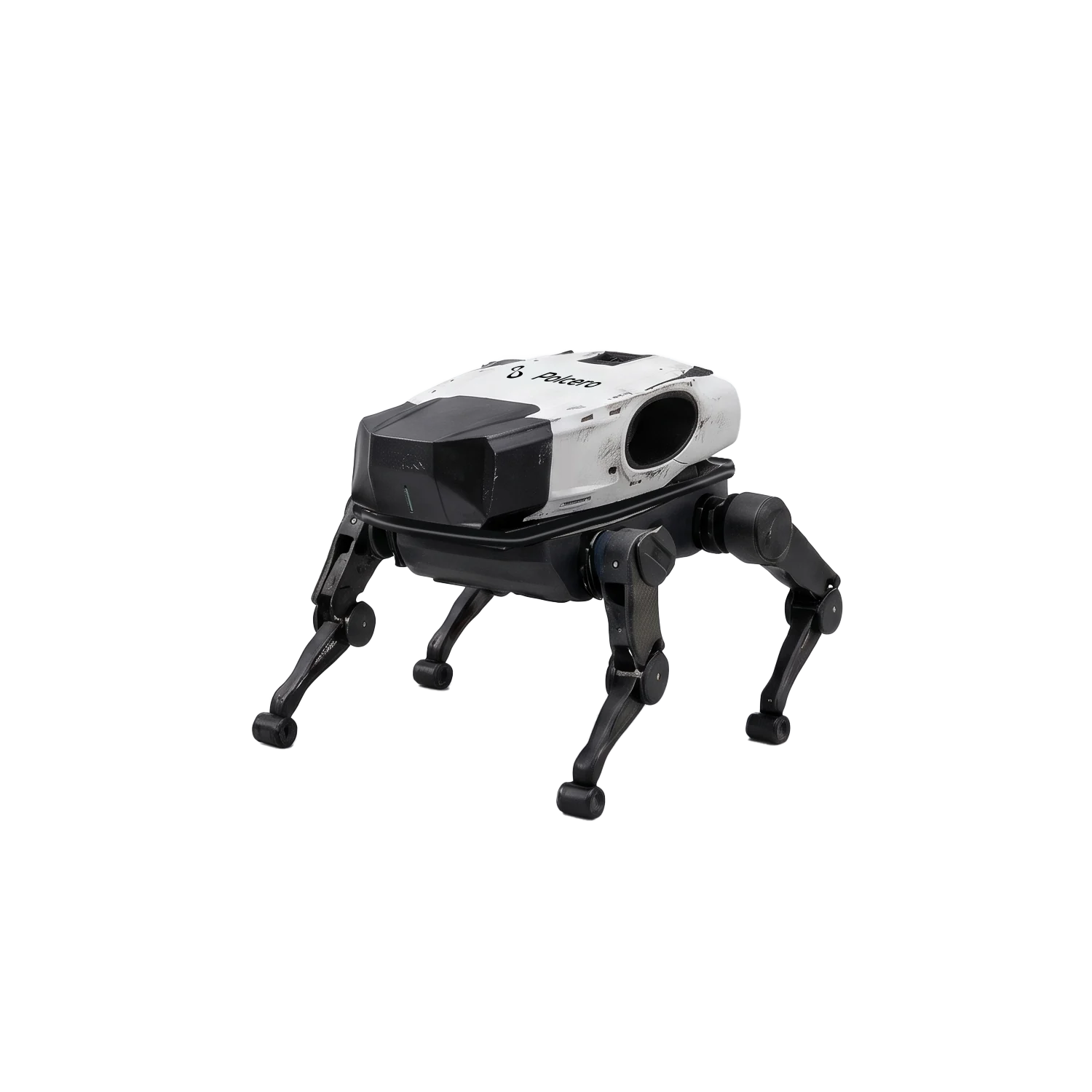
Legged robot
The core module on a legged chassis. Clears stairs, curbs and terrain that wheels cannot.
- Drive
- Legged chassis (4 legs)
- Terrain
- Stairs, obstacles, uneven ground
Specialized robots
The same core module - control, AI and hot-swap batteries - on the chassis your terrain needs: legged, tracked, wheeled or wheel-leg.
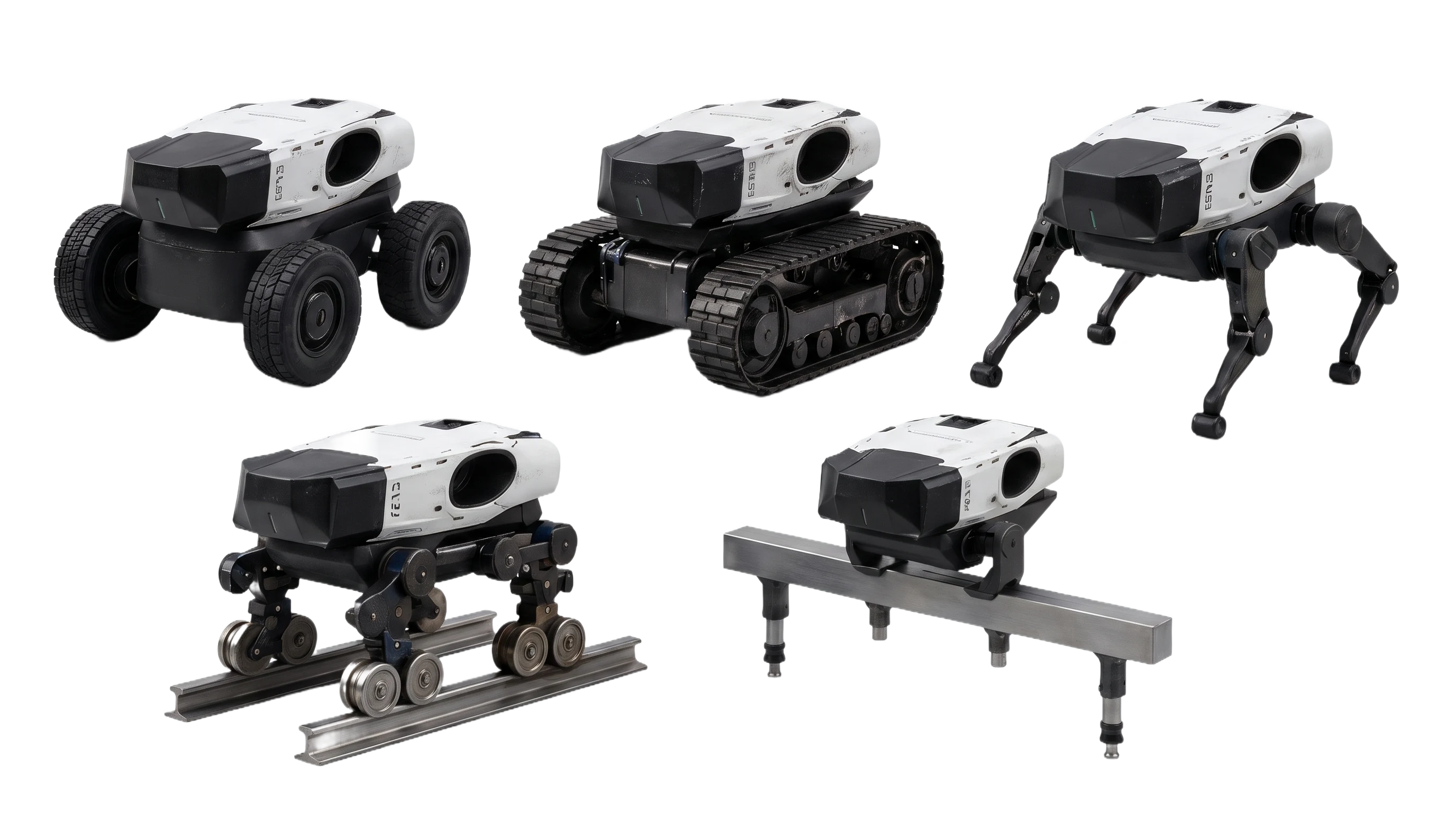
One core module, four chassis
At a glance
The same core module - control, AI and hot-swap batteries - on the chassis your terrain needs: legged, tracked, wheeled or wheel-leg.
We build robots around the client’s specific process - starting from our own prototypes, adapted to purpose. We fit the technology to the process, not the other way around.
PriceOn request
Platforms
The same core module on four interchangeable chassis - choose the platform for your terrain.
The core module on a legged chassis. Clears stairs, curbs and terrain that wheels cannot.
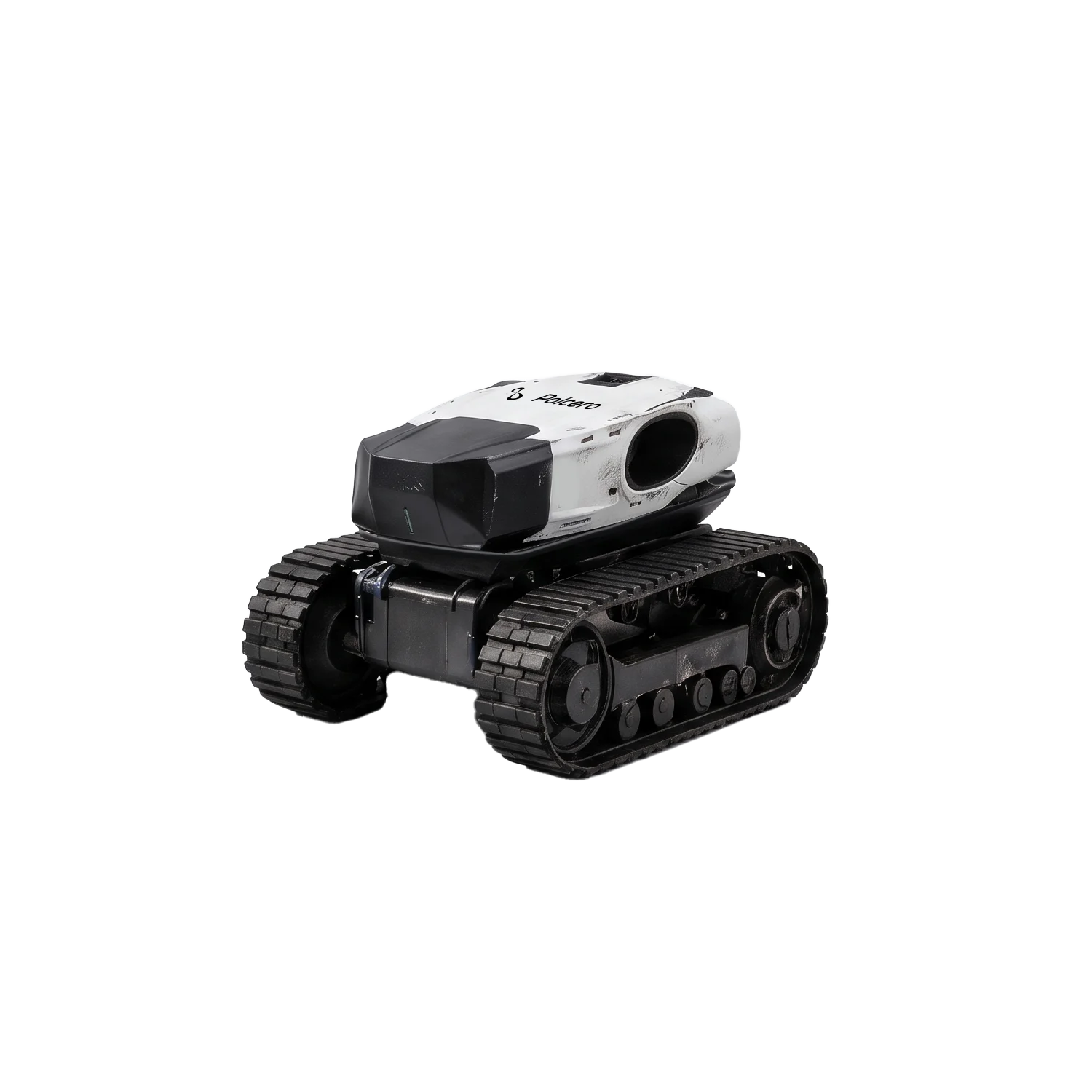
A tracked chassis for rough, uneven ground, construction sites and fieldwork.
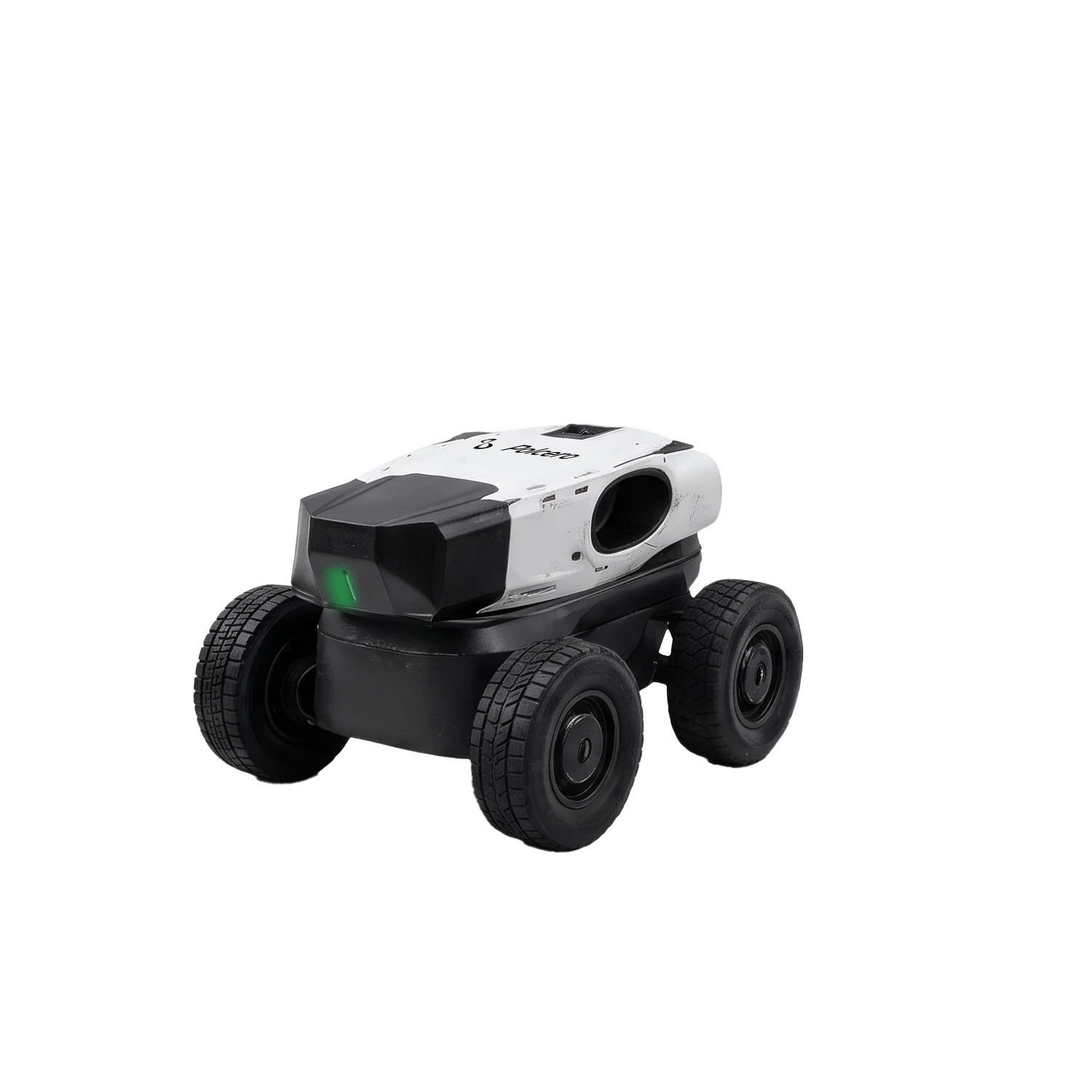
A fast, quiet wheeled chassis for industrial floors, warehouses and monitoring.
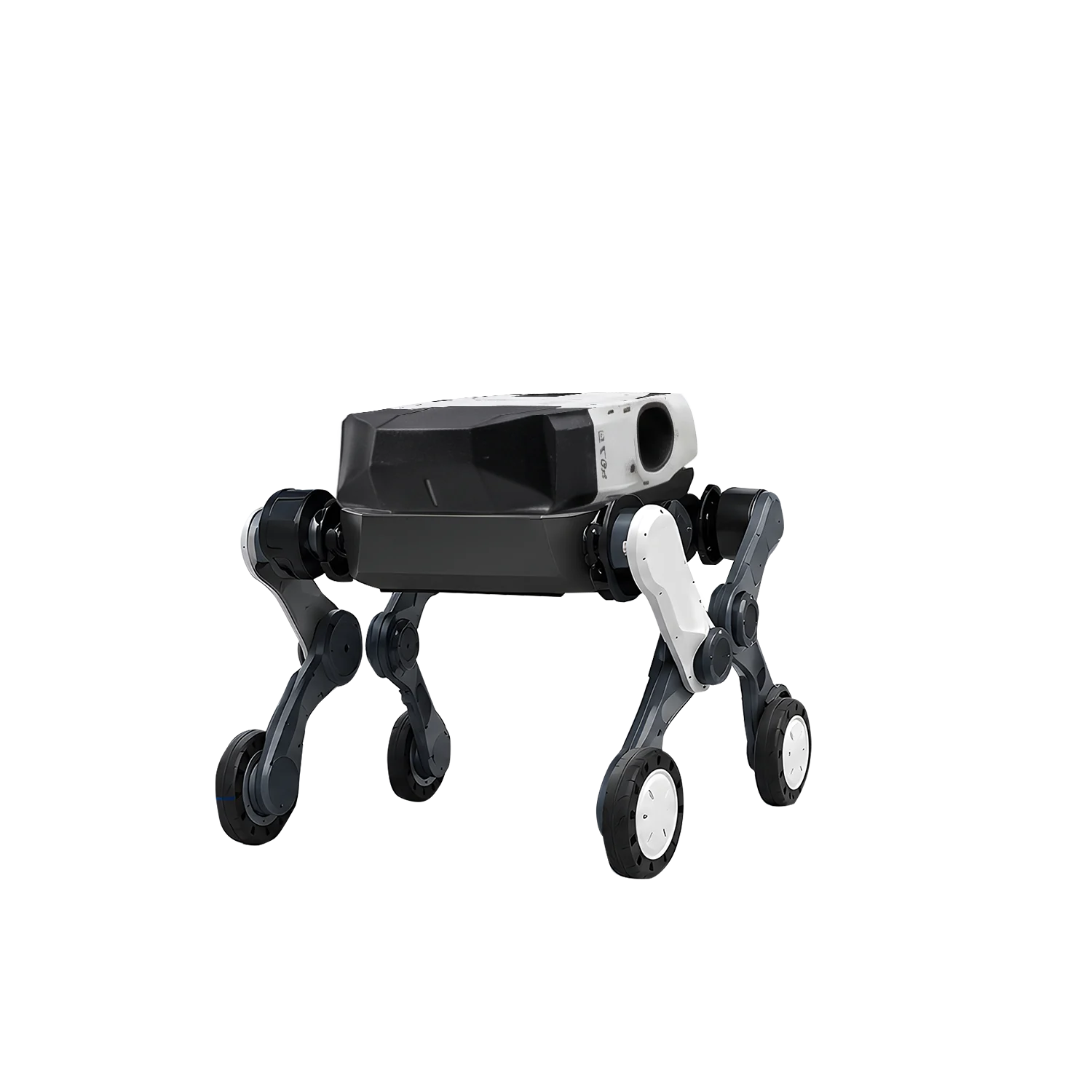
A hybrid wheel-leg chassis: rolls on the flat and clears obstacles and rails.
Every one of these is the same core module - control, AI and hot-swap batteries - on a different chassis. Keep the brain and the task modules; change the platform to match the ground. Add or remove arms, a gripper, a harvest head or a sensor mast at the quick-release connector.
Stairs, obstacles, uneven ground
A four-legged chassis that clears stairs, curbs and broken ground no wheel can take. It walks inspection routes through plants, substations and sites laid out for people, not machines.
Modular options: Add one or two arms with a gripper for manipulation, or a sensor mast for inspection. Swap to a wheeled or tracked base when the ground turns flat or soft.
Unpaved, heavy terrain, construction sites
A tracked chassis for mud, rubble and steep, unpaved ground. It carries load across a construction site or open field where wheels bog down and legs are too slow.
Modular options: Fit a logistics carrier for heavy transport, an arm for handling, or a survey mast for BIM inspection. The same body moves to legs or wheels when the job changes.
Floors, warehouses, flat ground
A fast, quiet wheeled chassis for industrial floors and warehouses - about 2.5× more energy-efficient than legs on flat ground. Ideal for patrol, monitoring and internal transport.
Modular options: Add arms and a gripper for pick-and-place, a sensor mast for monitoring, or a carrier for transport. Move the core module to a tracked base to leave the pavement.
Flat ground, obstacles and rails
A hybrid wheel-leg chassis: it rolls fast on the flat and, when it meets a step, a curb or a rail, the legs lift the wheels over. One platform for mixed environments that would otherwise need two robots.
Modular options: Arms, gripper, harvest head or sensor mast all mount at the quick-release connector. Drop the legs for a pure wheeled base, or add them back when the route gets rough.
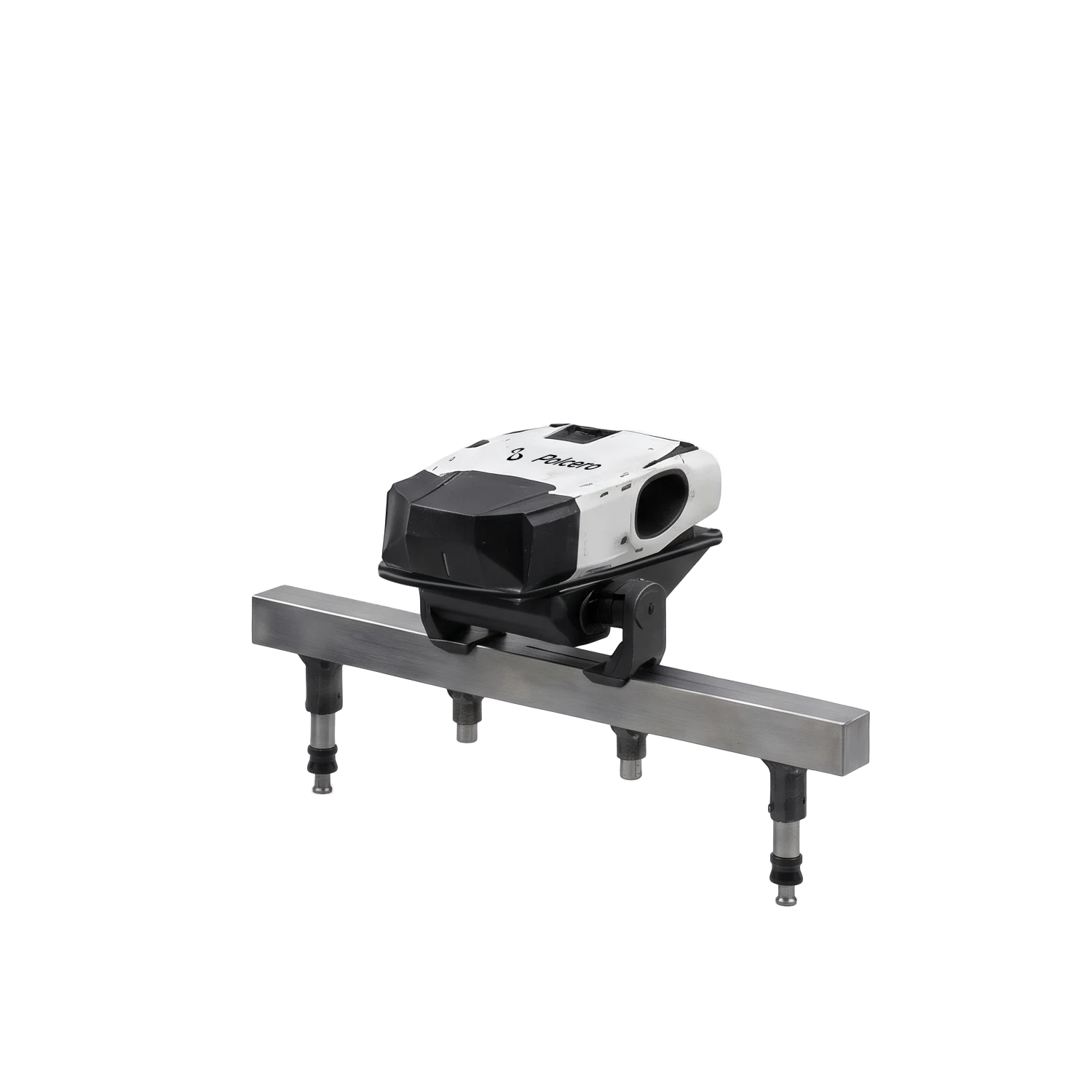
Production lines, mobile machines, headers
The core module fixed at a single point - on a production line, or mounted on a moving machine or header. On a lettuce-harvest header, for example, the arms cut and lay the crop straight onto the belt as the machine advances.
Modular options: Choose one or two arms with a gripper, cutter or harvest head. Mount it stationary on a line, or on any host machine that carries it through the field.
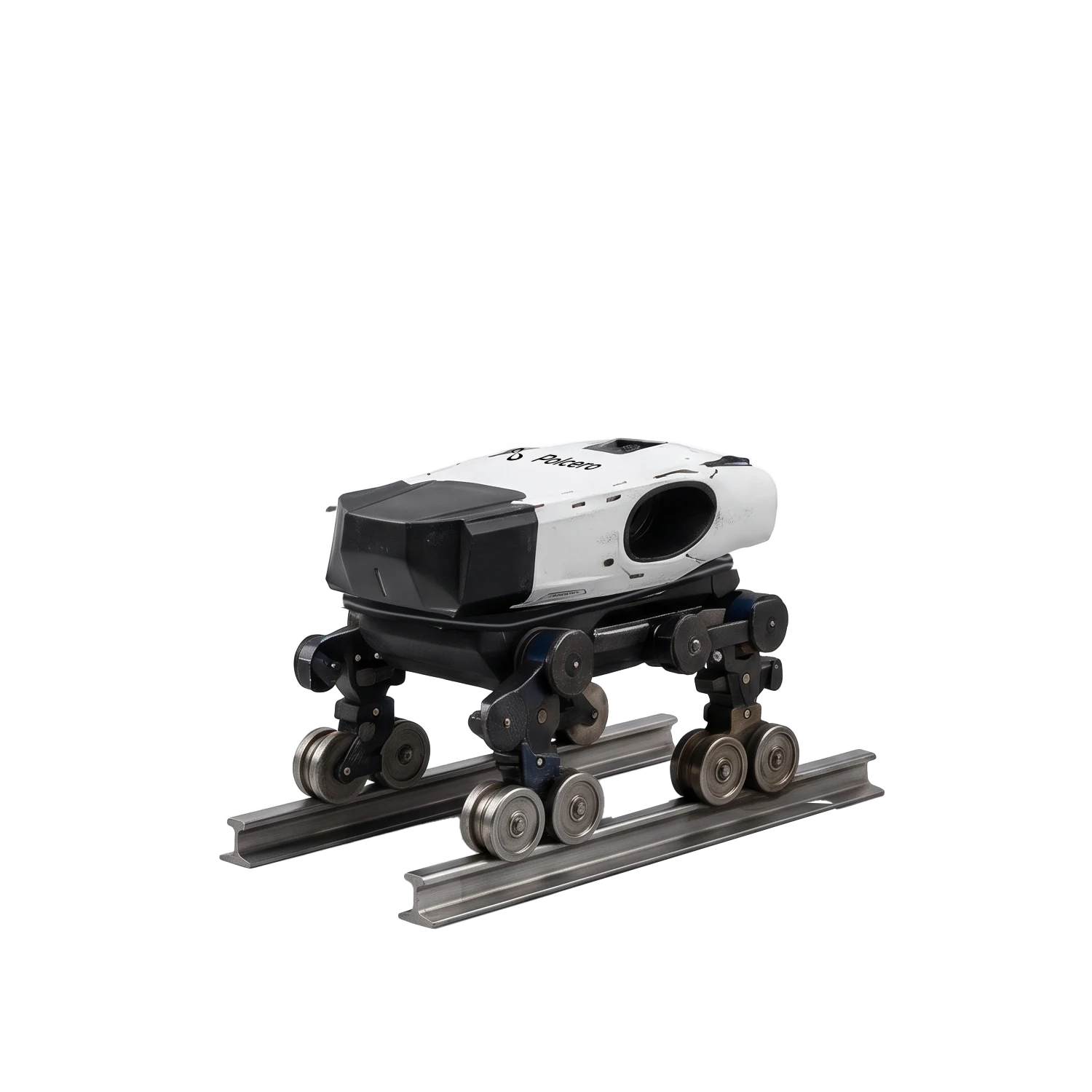
Greenhouses, rows, fixed routes
A rail-guided version for greenhouses and glasshouses laid out in fixed rows. It runs the heated pipe rails between crops for precise, repeatable spraying, monitoring and selective harvest.
Modular options: Add a spray or fertigation head, a sensor mast or a soft gripper. The same core module lifts off the rails onto a wheeled or wheel-leg base for open ground.
Use cases
What we use this model for.
The common core stays the same: chassis, controls, perception and a quick-release tool connector. The working end and the program change - not the whole machine. We mount the core module (control system + AI) on any specialized chassis, or add legs and arms to make a humanoid. Add a task module - arms with a gripper, a harvest head or a weeding laser - and the same robot takes on the next job.
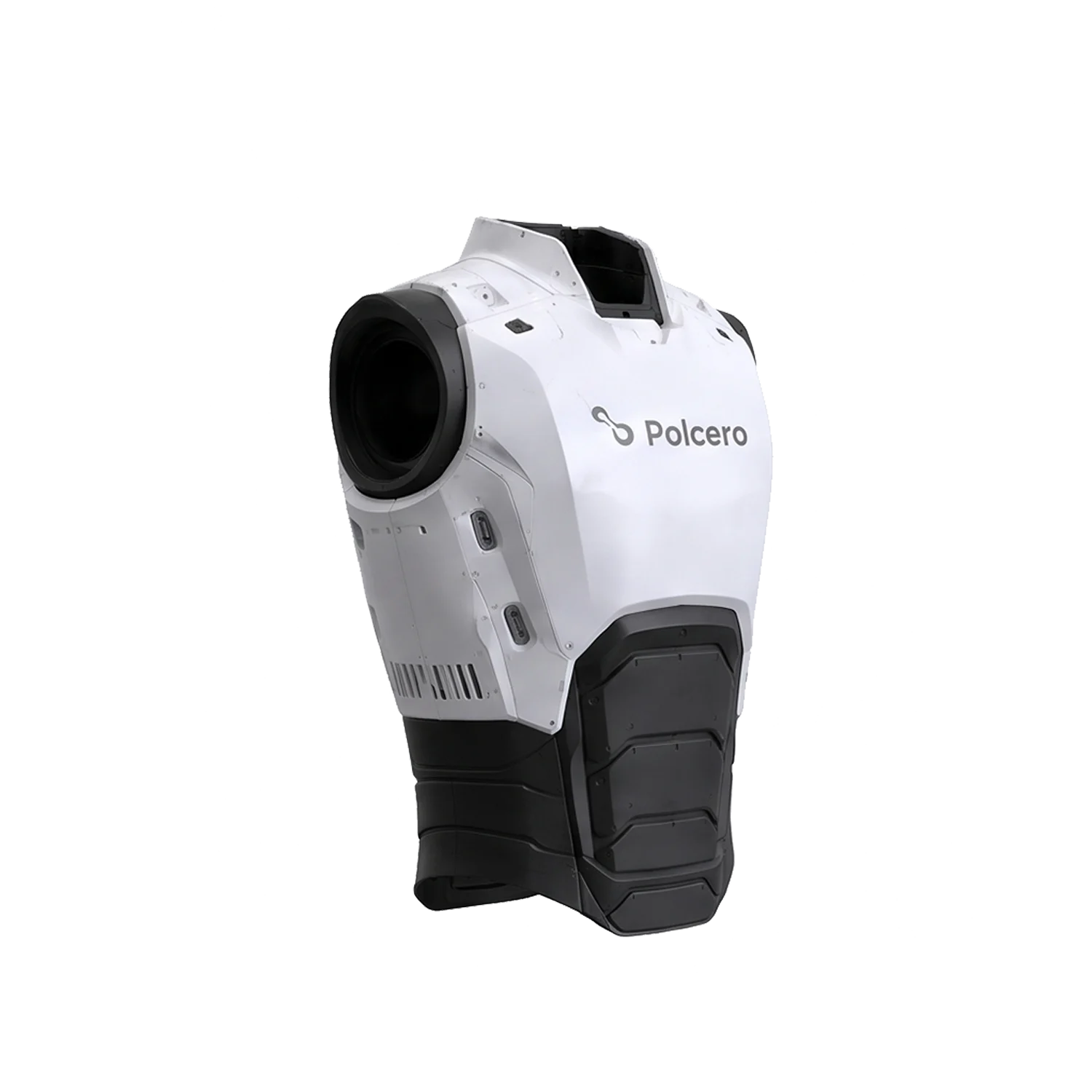 Core moduleControl, perception and AI in one module.Swappable chassisWheeled, tracked, legged or wheel-leg.
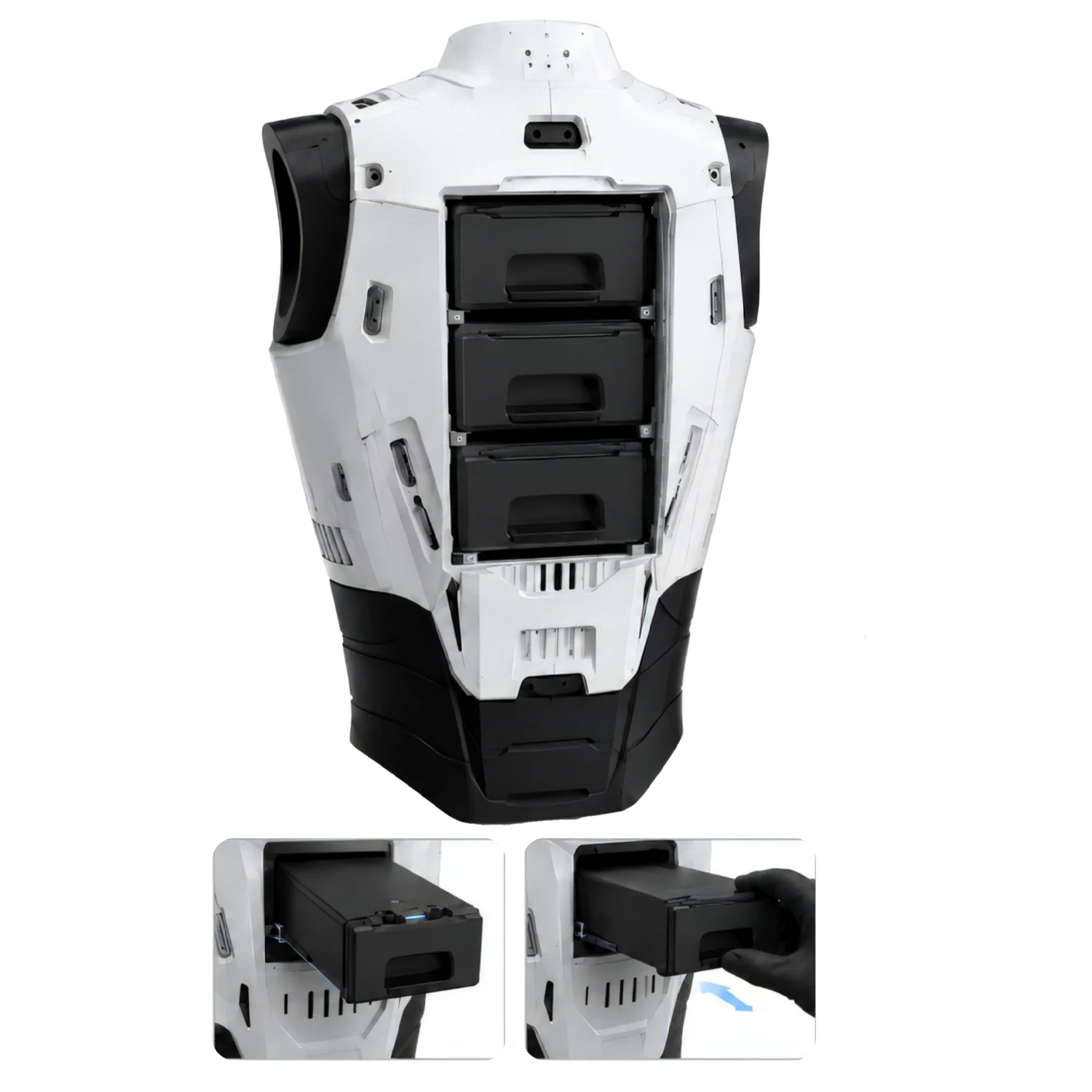
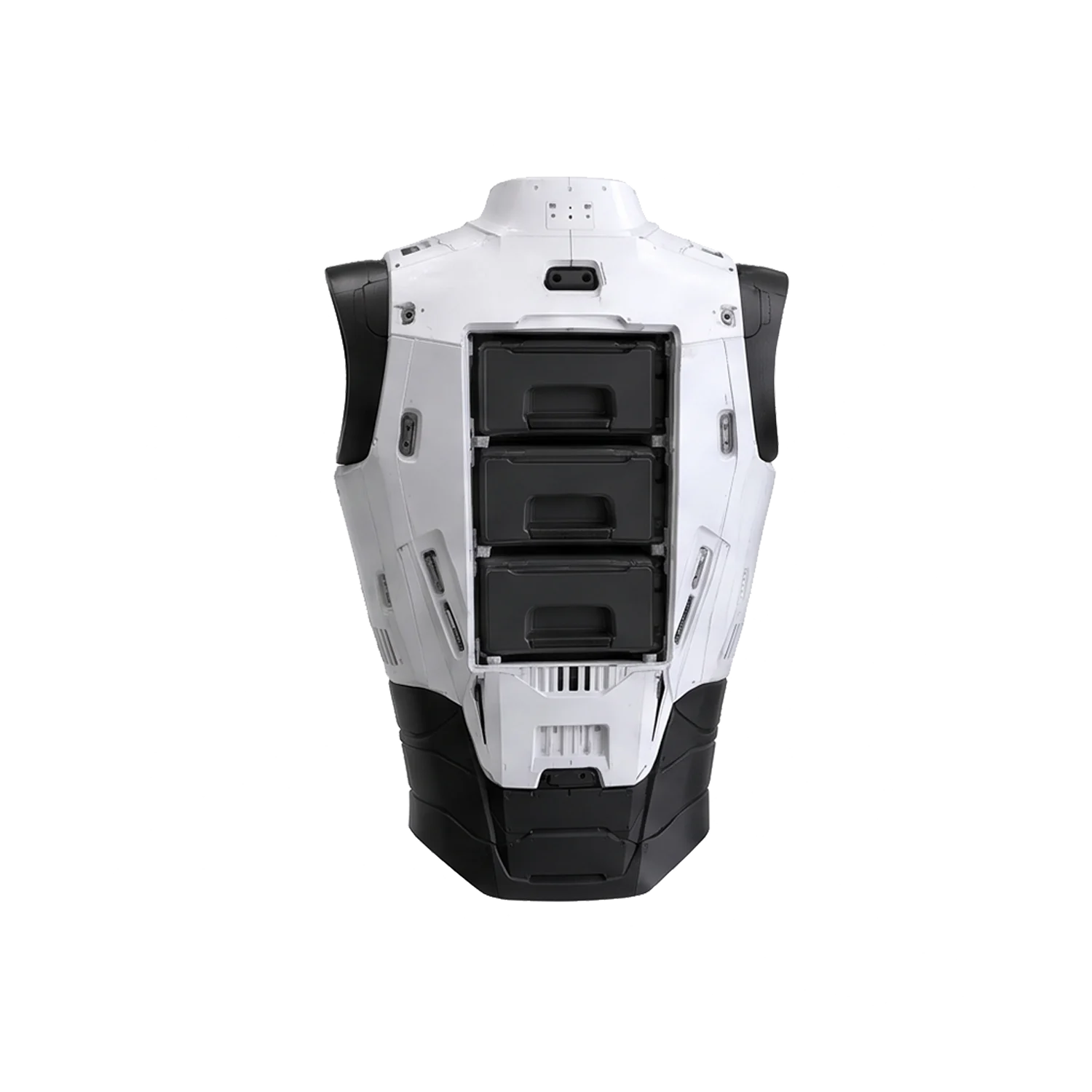 Swappable batteriesThree hot-swap batteries in the back.
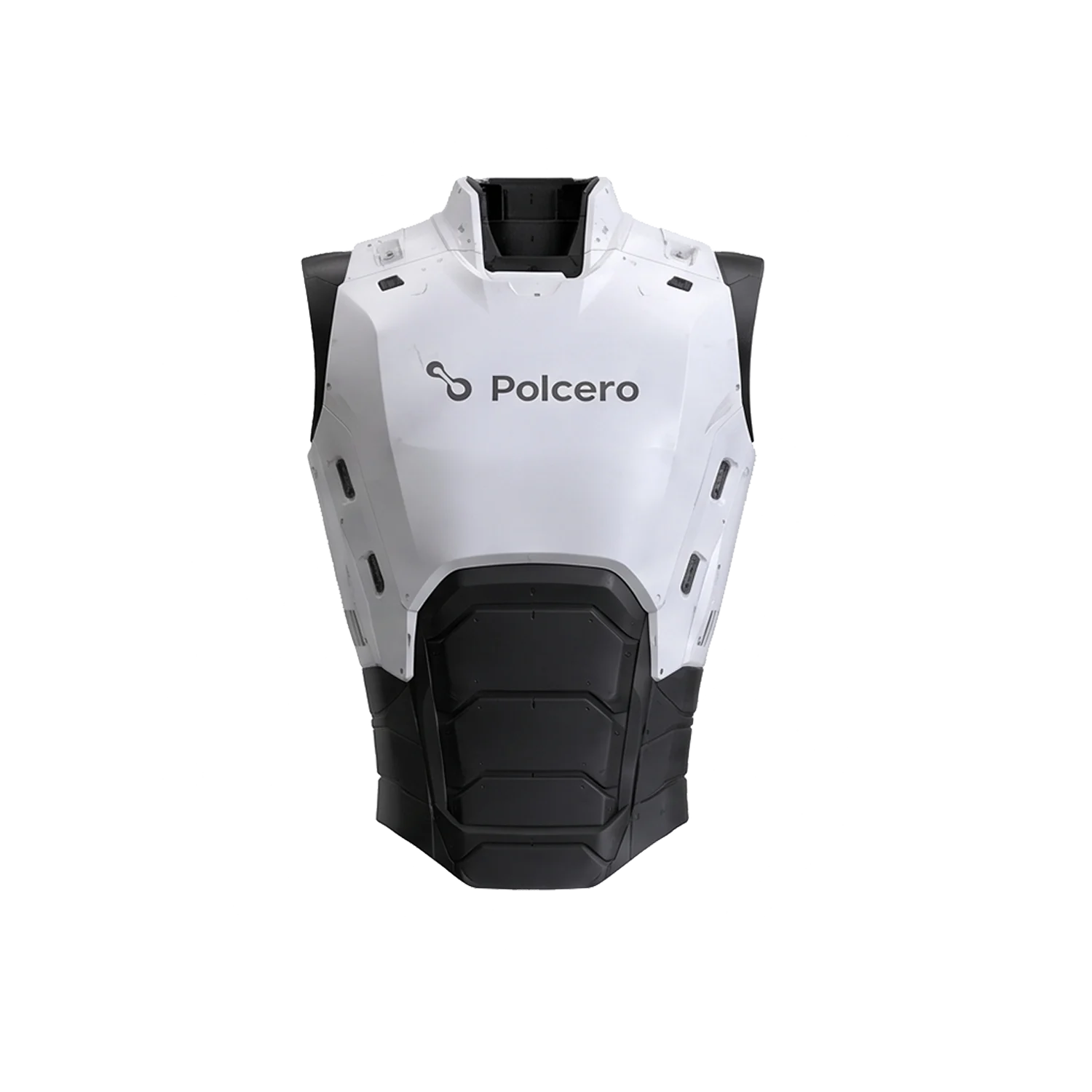 PerceptionCameras, LiDAR, on-device compute.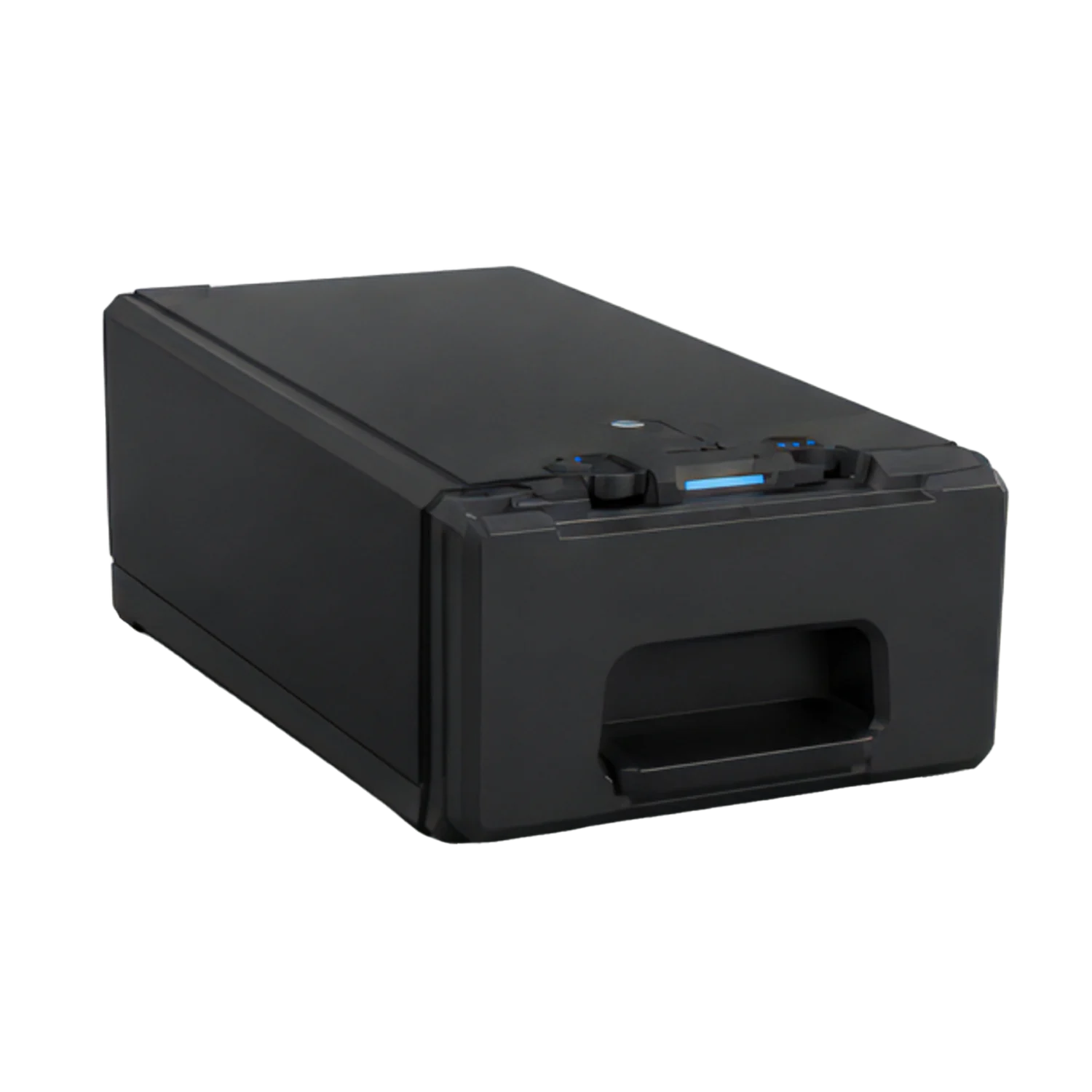
Each robot runs on three hot-swap battery packs seated in the core module. A pack is a self-contained 48 V unit, so power scales with the number of packs and a depleted one is replaced without tools while the robot keeps working on the others.
The robot never fully powers down to recharge. It rotates its three packs one at a time, running on the remaining two while a spent pack charges - so a shift does not stop for the battery.
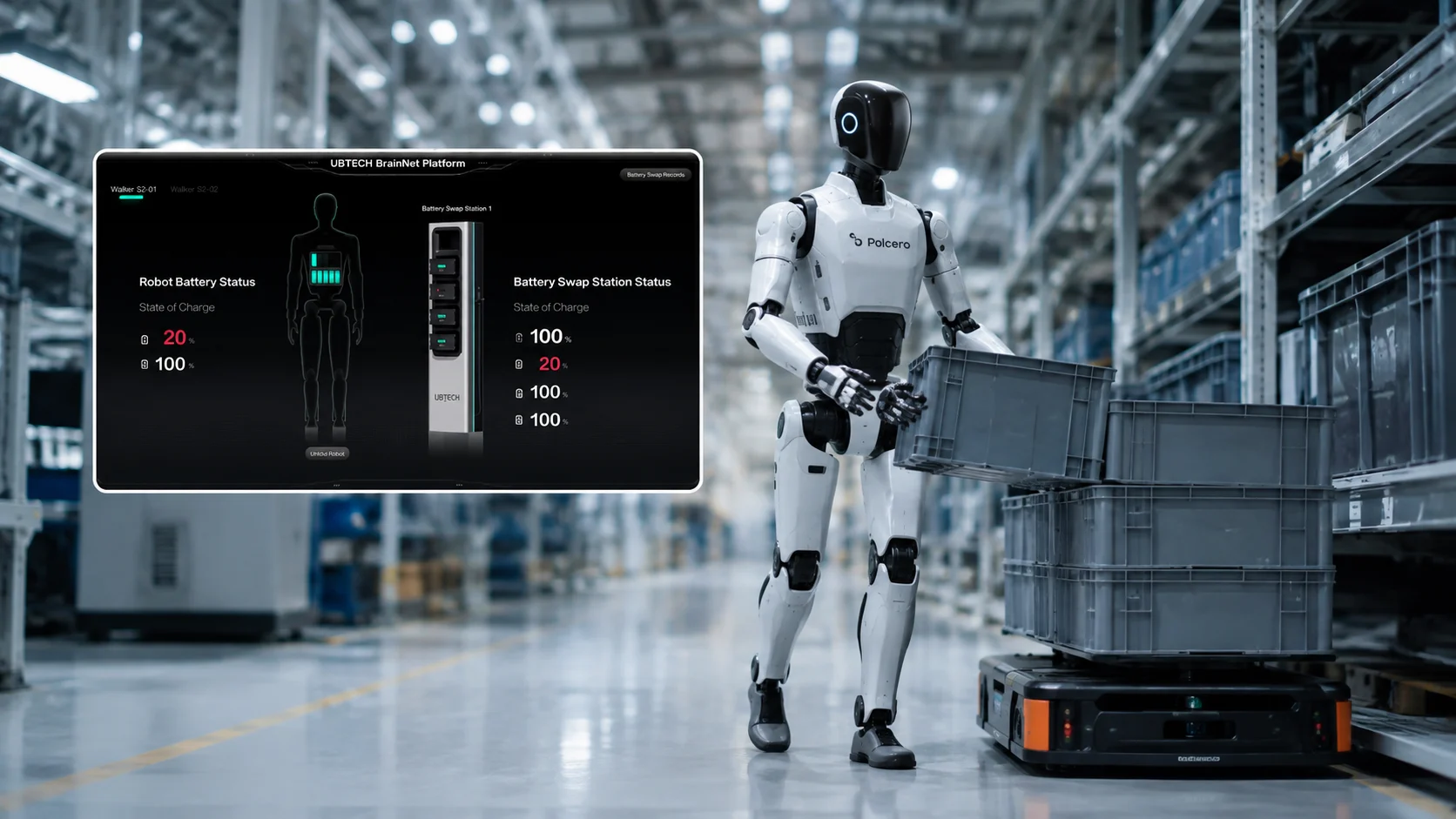
Every pack reports its own state, so the robot and its operators always know when to swap. A 4-bay charging station keeps a rotation of packs ready, and the robot docks to swap its own packs during work.
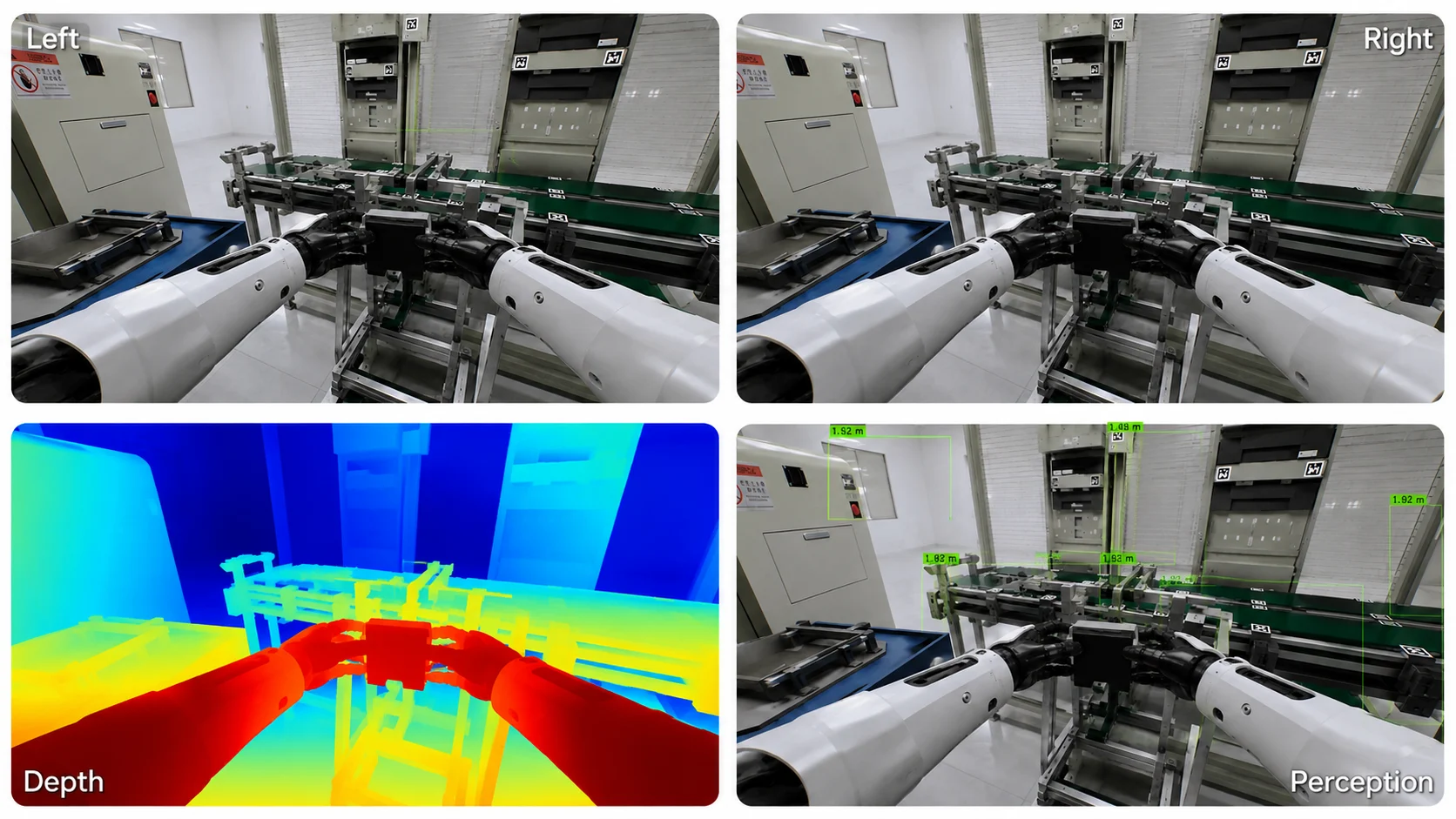
The robot builds one picture of the world from several views at once. A wide-field binocular head gives a left and a right image; comparing them yields depth; on top of that the AI layer adds a perception view that names objects, surfaces and people.
The left eye of the binocular head - a wide-field colour view of the scene.
The right eye - the second colour view the robot compares against the left.
Stereo disparity between left and right yields distance to every point in the frame.
The AI layer labels objects, surfaces, obstacles and people, and plans the next move on-device.
On a specialized chassis the core module carries an added mast of tools and cameras for the task at hand.
Chassis LiDAR and ultrasonic sensors map rough terrain and catch obstacles beyond the cameras.
Optional multispectral and thermal imaging for crop health, inspection and night work.
Detection and planning run on-device; data and compliance stay in the EU.
The robot is autonomous on batteries, but where a site can supply power it runs straight off the grid through a cable - no packs to rotate, no downtime, lower running cost.
Fully mobile and autonomous. Three packs rotate through the charging dock so the robot roams anywhere without a tether.
For a fixed station or 24/7 duty, the robot draws power over a cable and runs continuously - the batteries become a backup.
In halls, factories and greenhouses we install fixed power rails; outdoors, on fields and yards, overhead conductor lines like tram catenary. The robot draws from the line and tops up its packs while it works.
Construction
Drive & mobility
Manipulation
Power
Perception
AI & software
Values are design assumptions; the product is under development and configuration may change. Please confirm details with sales.
Cookie preferences
Choose which categories of cookies you allow. Essential cookies are always on.
Essential
Required for core site functionality and security. Always active.
Analytics
Help us understand how the site is used so we can improve it.
Marketing
Used to measure and personalise campaigns.