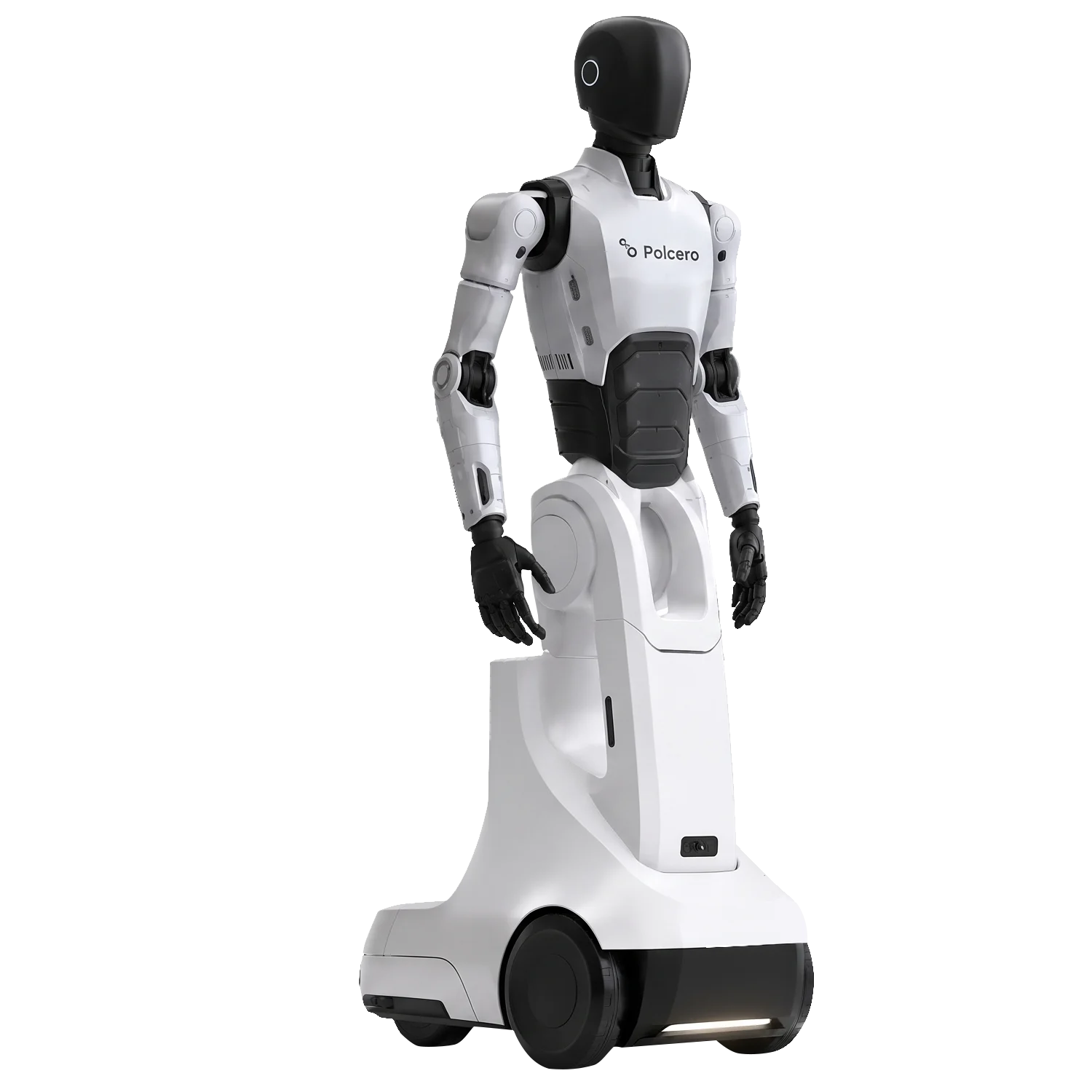
Humanoid
Humanoid
The core module completed with legs and two arms. Enters spaces designed for people and operates machines built for manual handling.
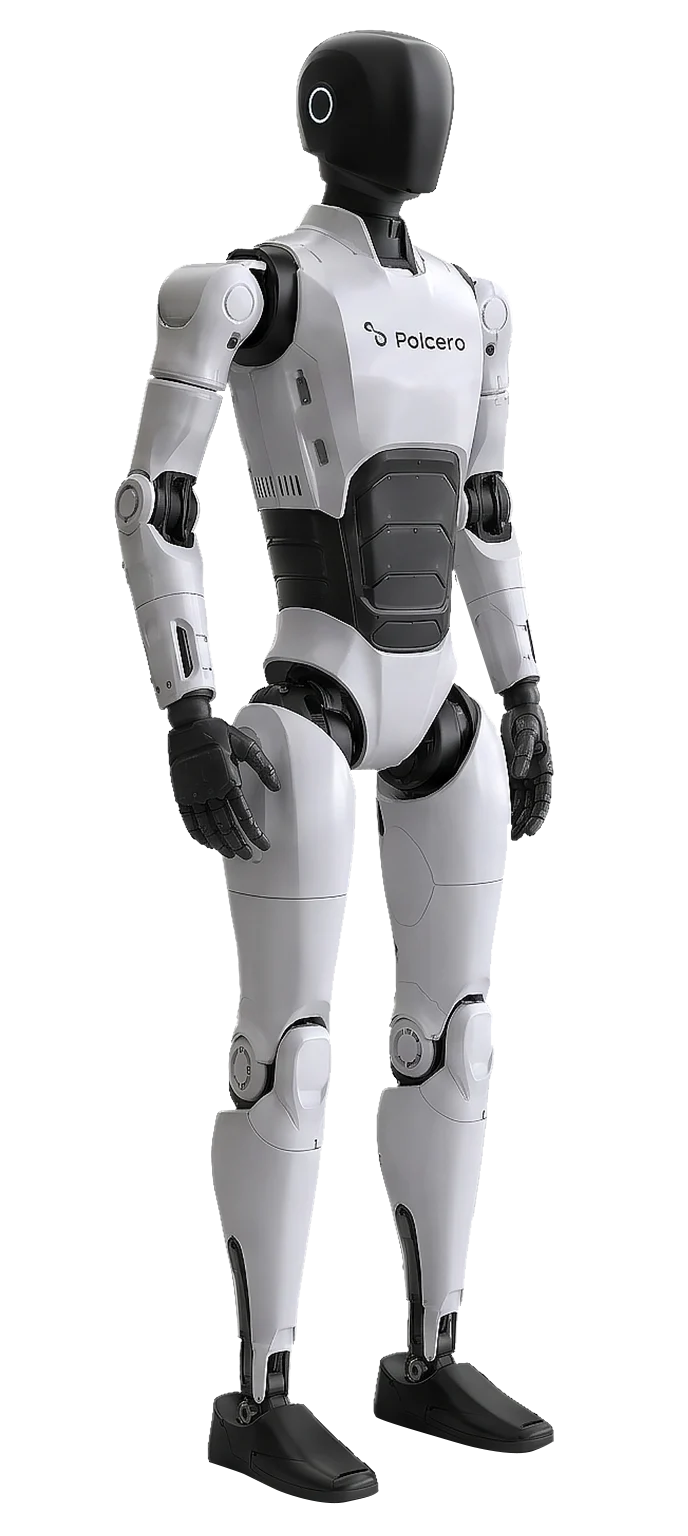
Works where people work
At a glance
The core module completed with legs and two arms. Enters spaces designed for people and operates machines built for manual handling.
We build robots around the client’s specific process - starting from our own prototypes, adapted to purpose. We fit the technology to the process, not the other way around.
PriceOn request
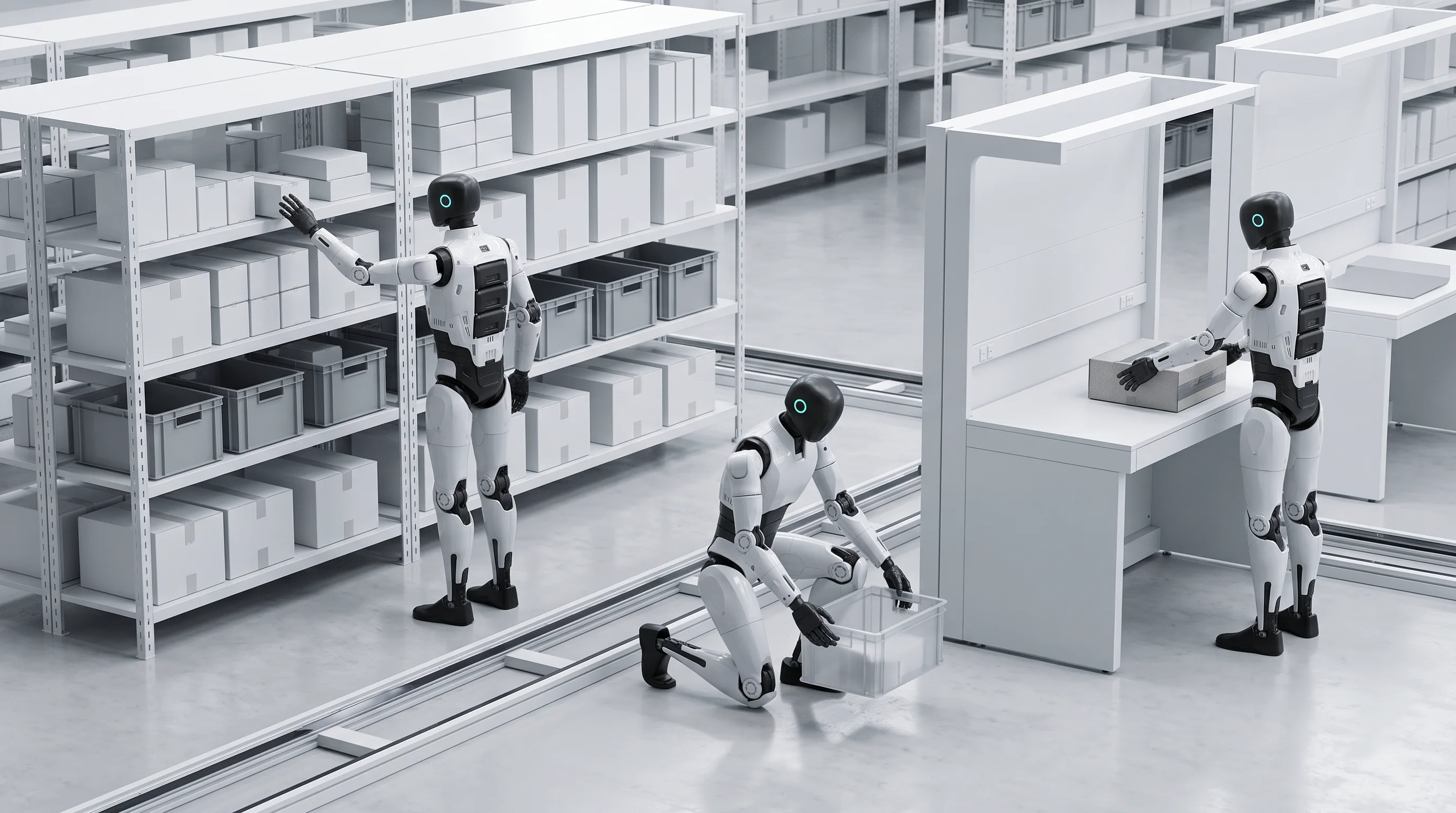
Three humanoids, one warehouse
This is what a shift looks like. In a single room, one humanoid packs a parcel at the bench, a second lifts a loaded metal tote off the floor, and a third stacks boxes onto a rack. Same robot, three jobs - each entered a space built for people and picked up work built for human hands, with no line to rebuild around them.
Use cases
What we use this model for.
- 01Manning stations designed for people
- 02Assembly and repetitive physical work
- 03Operating machines built for manual handling
- 04Domestic help and cleanup (roadmap)
Modular construction
The common core stays the same: chassis, controls, perception and a quick-release tool connector. The working end and the program change - not the whole machine. We mount the core module (control system + AI) on any specialized chassis, or add legs and arms to make a humanoid. Add a task module - arms with a gripper, a harvest head or a weeding laser - and the same robot takes on the next job.
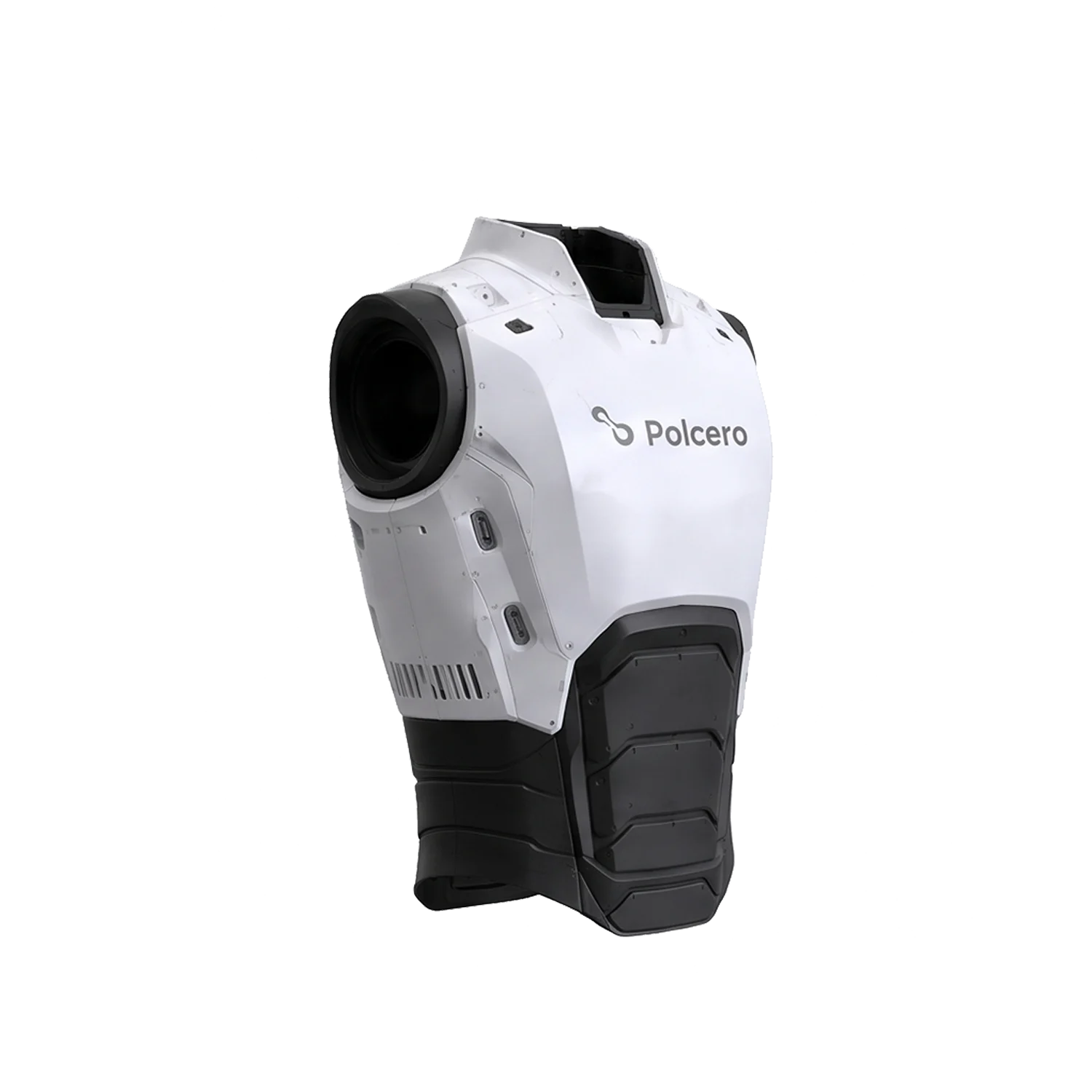 Core moduleControl, perception and AI in one module.
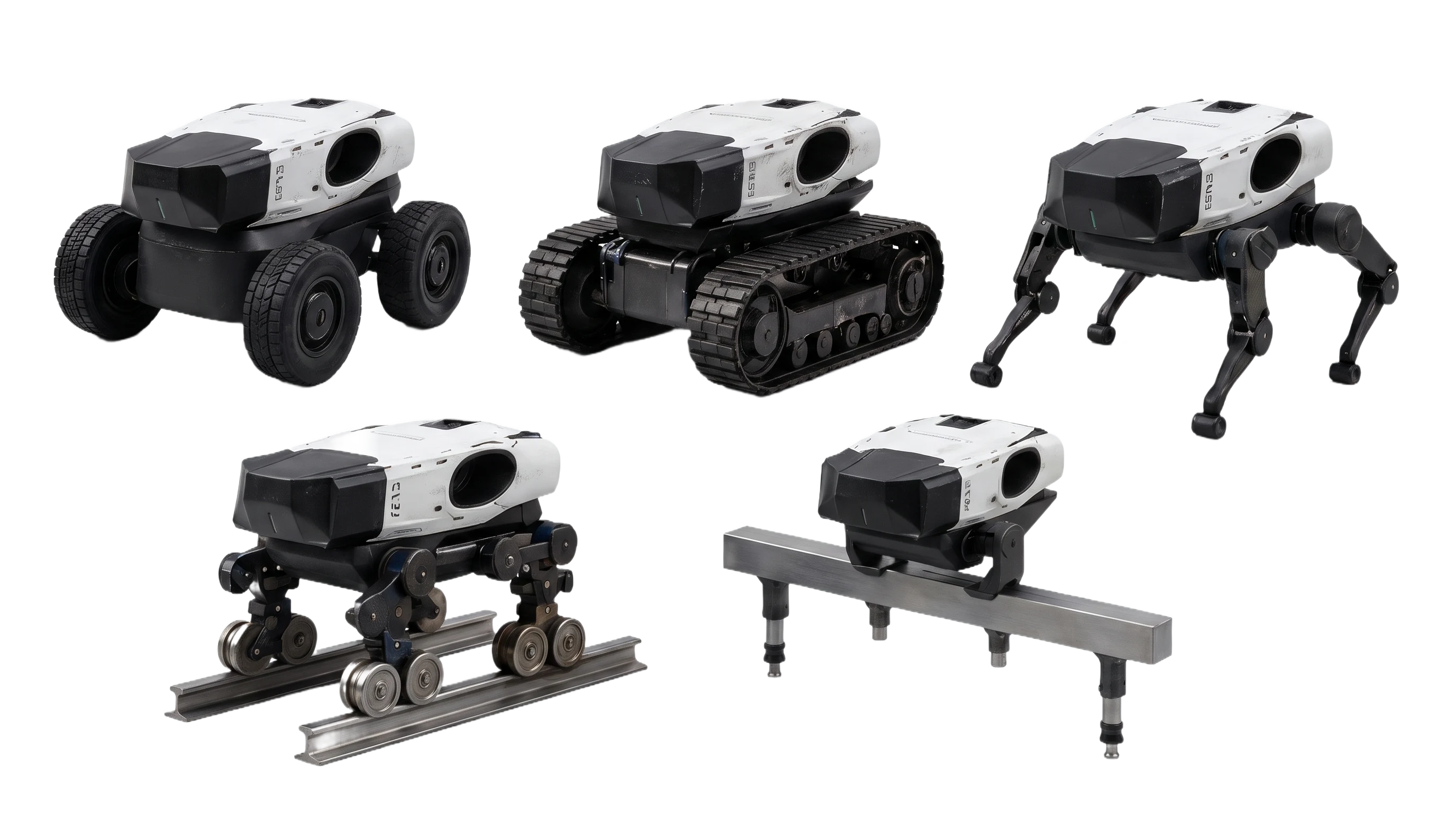 Swappable chassisWheeled, tracked, legged or wheel-leg.
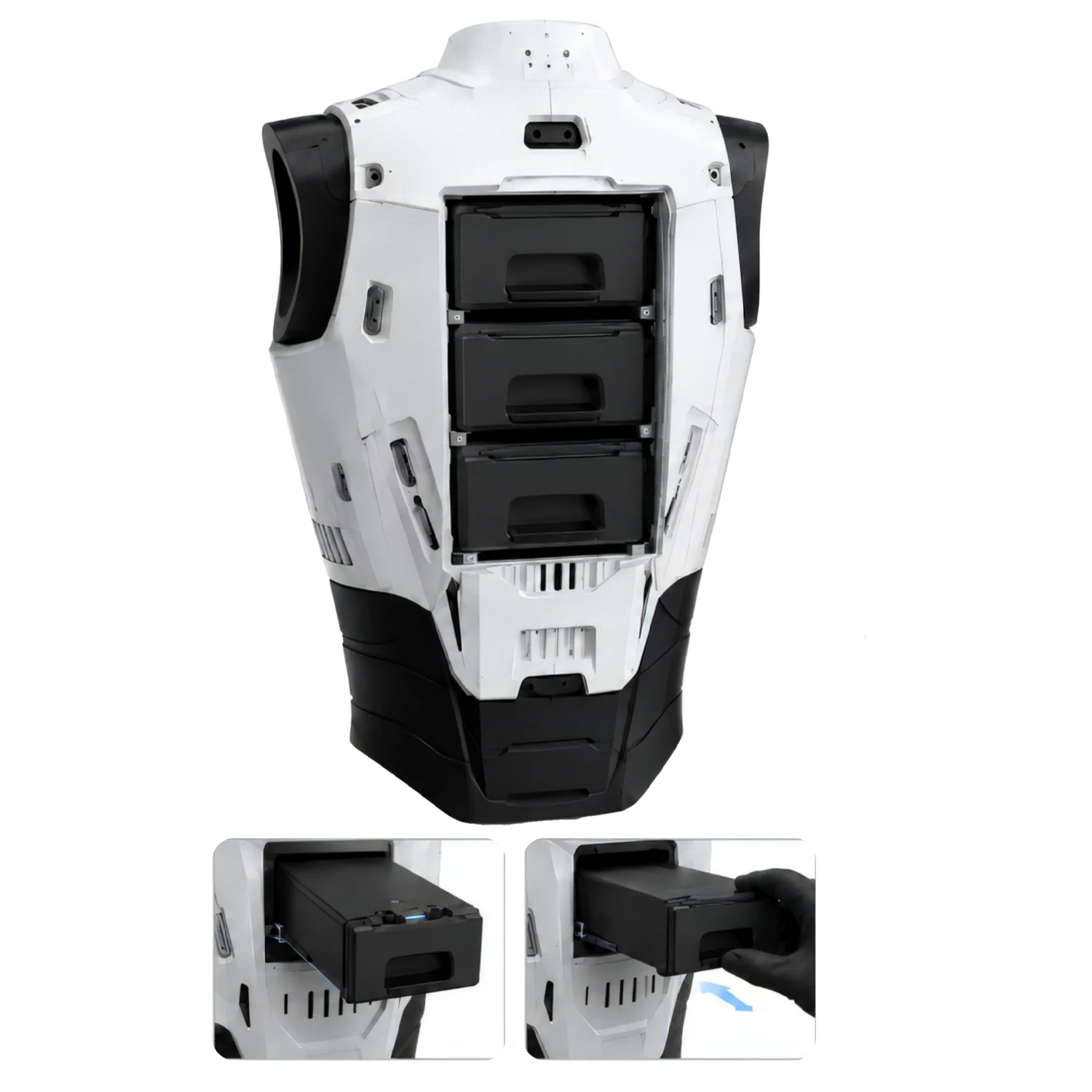
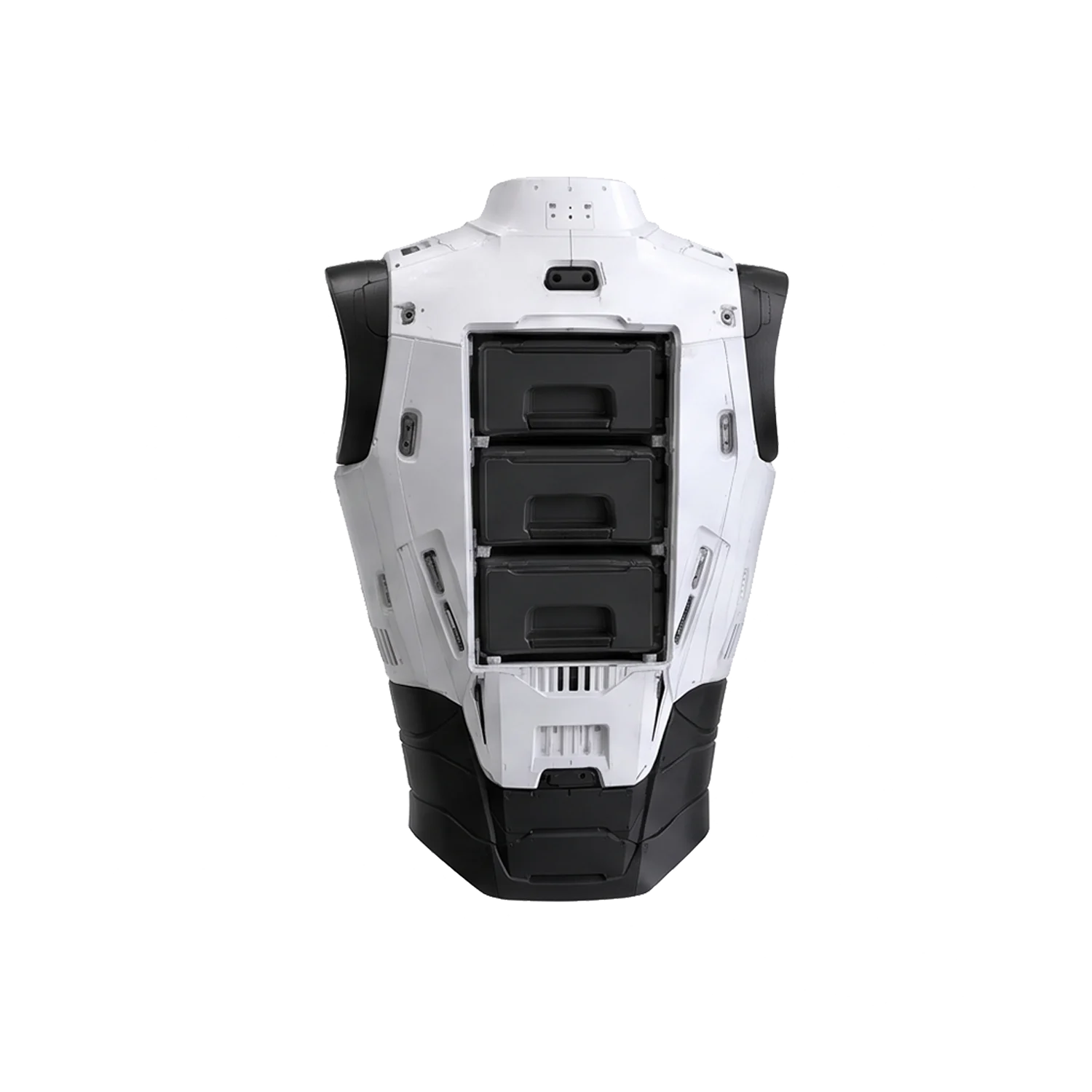 Swappable batteriesThree hot-swap batteries in the back.
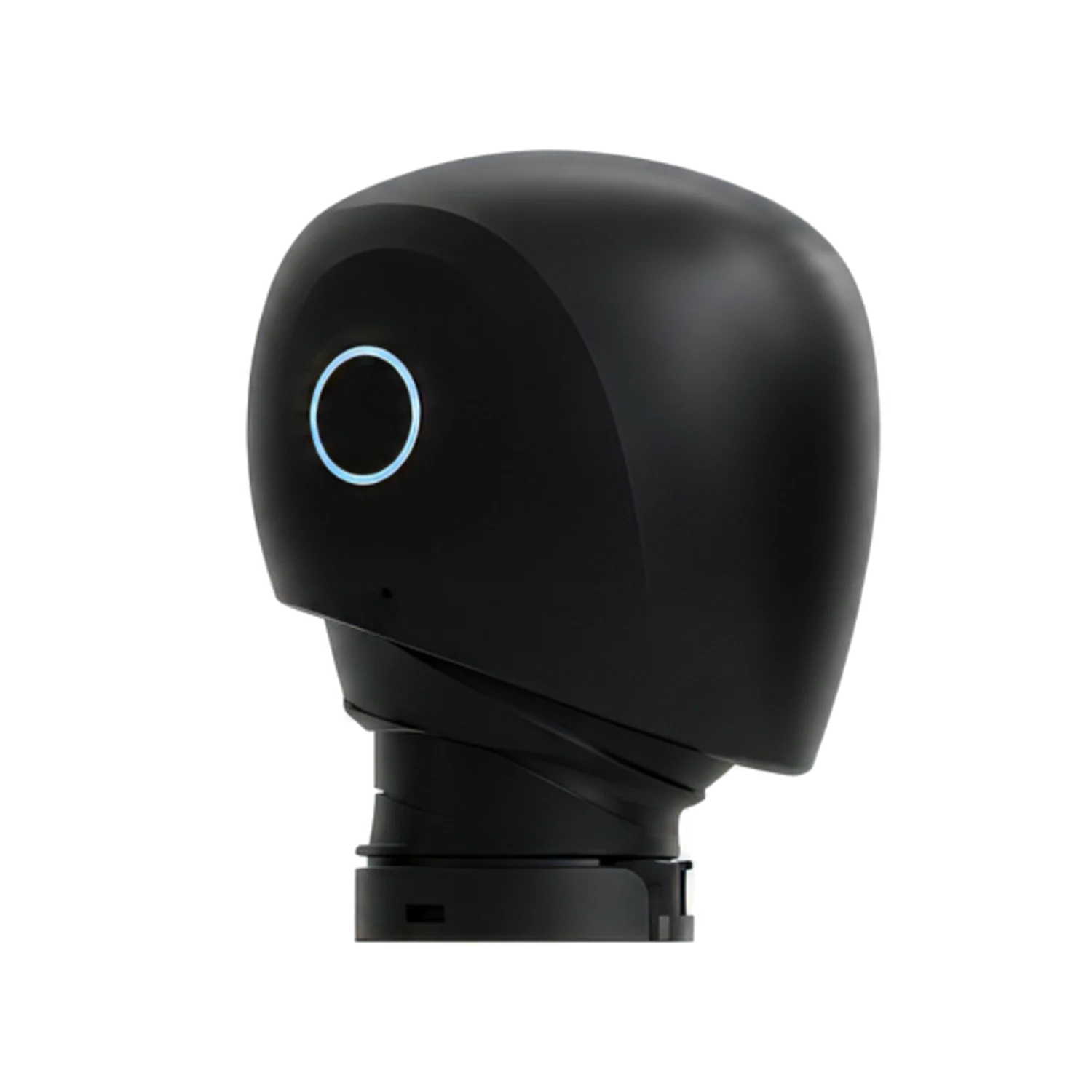 PerceptionCameras, LiDAR, on-device compute.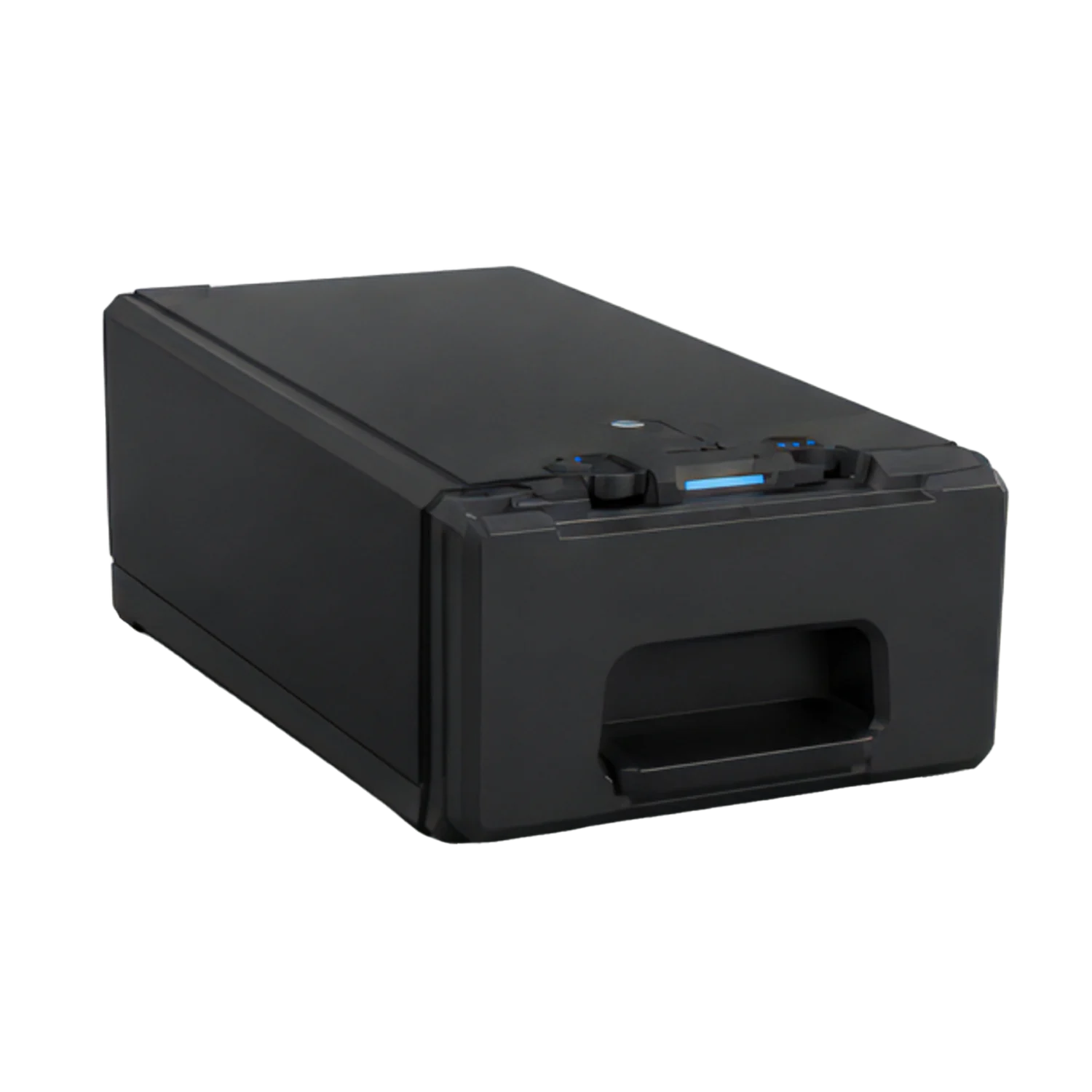
Battery and power
Each robot runs on three hot-swap battery packs seated in the core module. A pack is a self-contained 48 V unit, so power scales with the number of packs and a depleted one is replaced without tools while the robot keeps working on the others.
- Pack voltage
- 48 V hot-swap
- Pack energy
- ≈ 864 Wh each
- Packs in the core module
- 3 (≈ 2.6 kWh total)
- Runtime on battery
- ≈ 5 h typical duty
- On direct power
- 24/7 (tethered or grid)
- Swap time
- < 60 s per pack, tool-free
Self-swapping batteries - no downtime
The robot never fully powers down to recharge. It rotates its three packs one at a time, running on the remaining two while a spent pack charges - so a shift does not stop for the battery.
The robot does it itself
- Sensing a pack running low, the robot drives to the charging dock and holds state on the two remaining packs.
- An arm reaches to the back of the core module, releases the latch and lifts out the depleted pack.
- It seats the pack in a free bay of the 4-bay dock and takes a fully charged one in its place.
- The fresh pack clicks in; the robot repeats for each pack in turn and returns to work - never off, never idle.
A person can do it in seconds
- No shutdown and no tools: the packs are hot-swappable while the robot stands ready.
- Press the latch on the back of the core module and pull the pack straight out.
- Slide a charged pack in until it clicks home - the robot picks up where it left off.
Battery status and the charging station
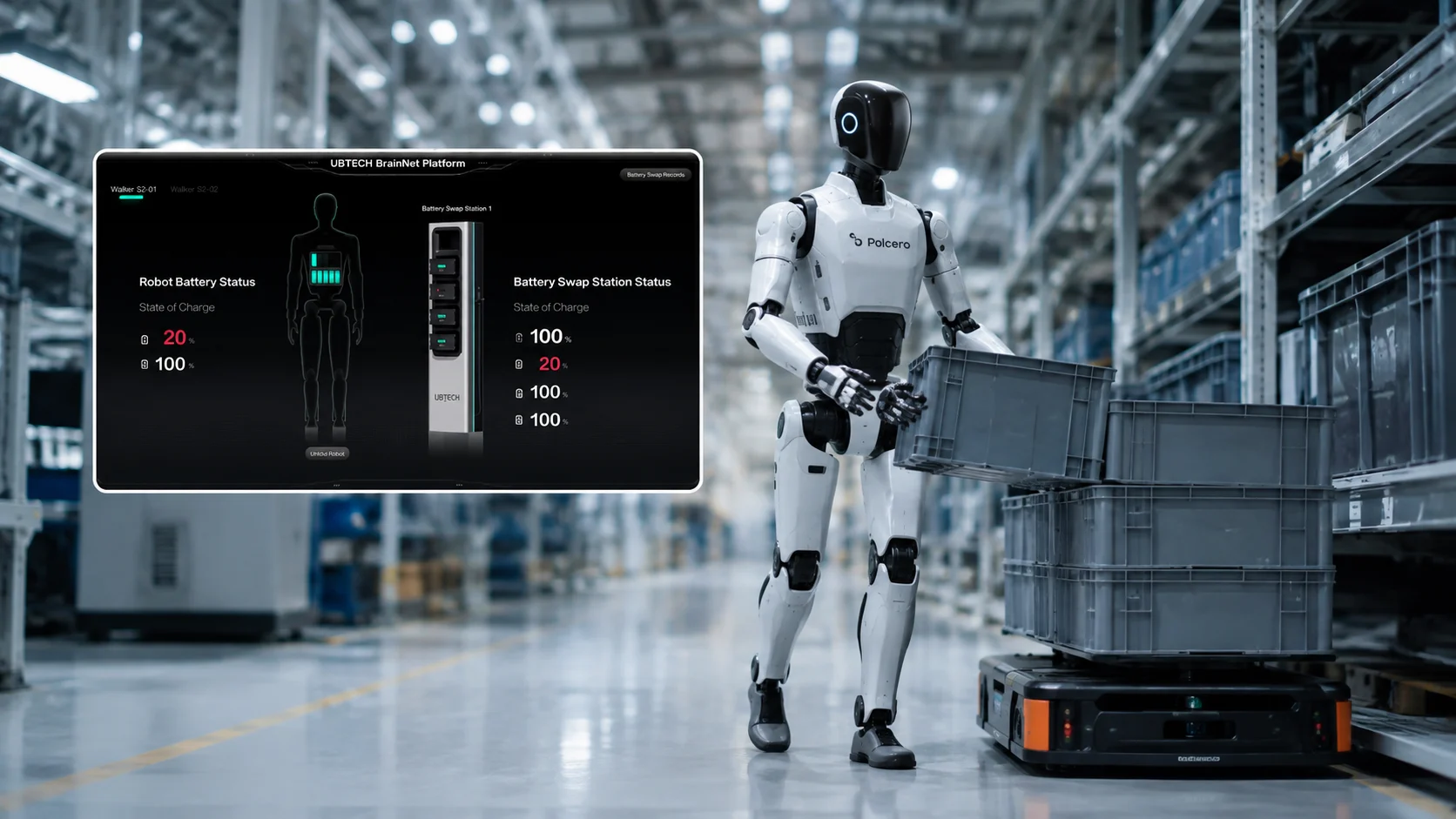
Every pack reports its own state, so the robot and its operators always know when to swap. A 4-bay charging station keeps a rotation of packs ready, and the robot docks to swap its own packs during work.
- Live per-pack state
- State of charge, health and temperature for each of the three packs, in real time.
- Predictive swap
- The system schedules the next swap before a pack runs out, so work is never interrupted mid-task.
- 4-bay charging dock
- Four charging inputs keep spare packs topped up and ready for the next rotation.
- Autonomous docking
- The robot rotates its own packs at the dock during a shift - no operator and no downtime.
How the robot sees
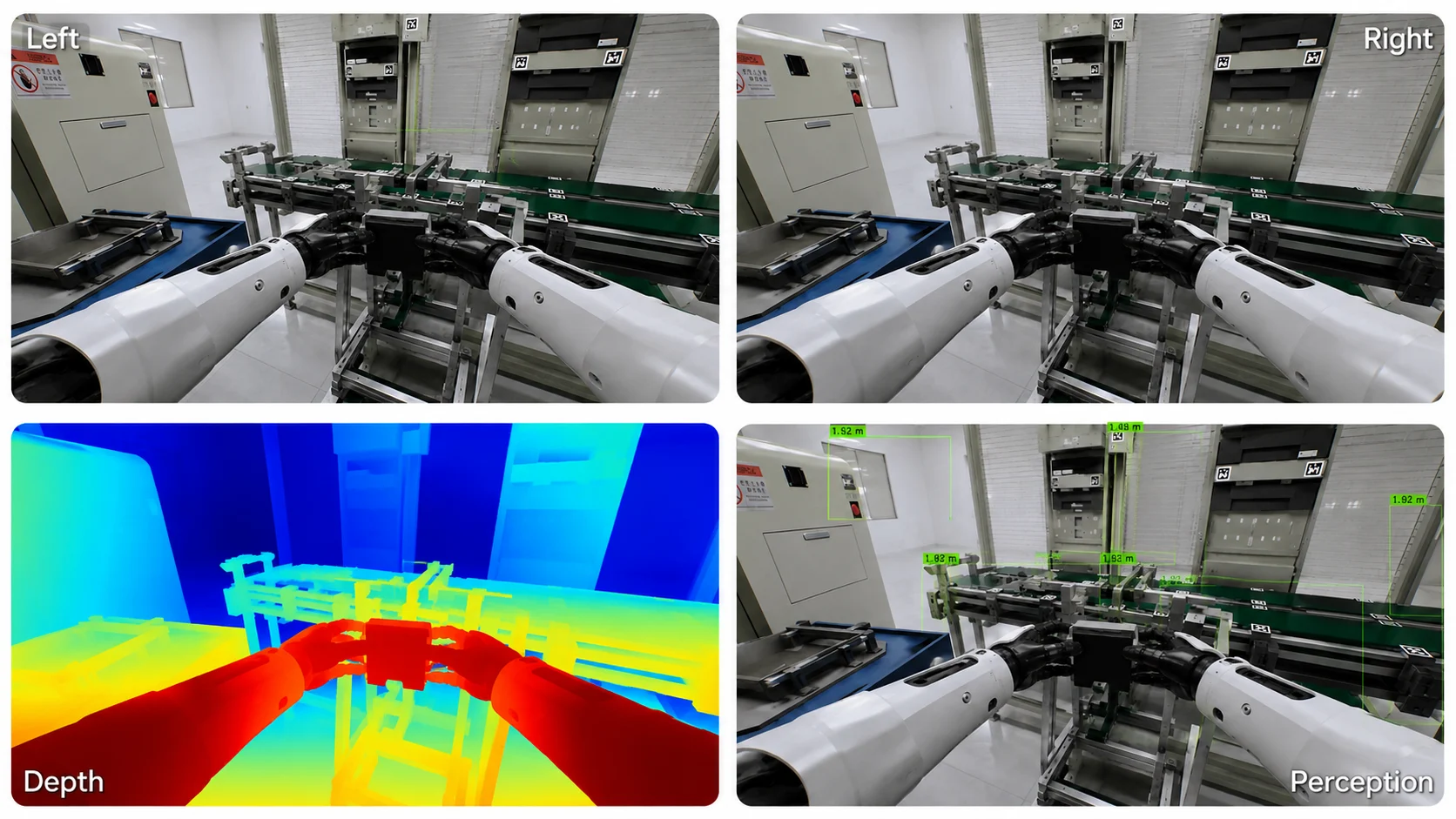
The robot builds one picture of the world from several views at once. A wide-field binocular head gives a left and a right image; comparing them yields depth; on top of that the AI layer adds a perception view that names objects, surfaces and people.
The left eye of the binocular head - a wide-field colour view of the scene.
The right eye - the second colour view the robot compares against the left.
Stereo disparity between left and right yields distance to every point in the frame.
The AI layer labels objects, surfaces, obstacles and people, and plans the next move on-device.
Wrist cameras
HD cameras at each wrist give a close-up view for precise grasping and assembly.
LiDAR + ultrasonic
Chassis LiDAR and ultrasonic sensors map the space and catch obstacles beyond the cameras.
Force and IMU
Force-feedback joints and an IMU sense contact and balance for safe, stable motion.
Voice and language
Voice interaction and a language model let a person direct the robot in plain speech.
Two ways to power it: batteries or the grid
The robot is autonomous on batteries, but where a site can supply power it runs straight off the grid through a cable - no packs to rotate, no downtime, lower running cost.
Hot-swap batteries
Fully mobile and autonomous. Three packs rotate through the charging dock so the robot roams anywhere without a tether.
Direct power (cable)
For a fixed station or 24/7 duty, the robot draws power over a cable and runs continuously - the batteries become a backup.
Grid infrastructure
In halls, factories and greenhouses we install fixed power rails; outdoors, on fields and yards, overhead conductor lines like tram catenary. The robot draws from the line and tops up its packs while it works.
Specification
Construction
- Material
- Aluminium & composites
- Modular construction
- Yes
- Core module (control + AI)
- Yes
- Quick-release tool connector
- Yes
Drive & mobility
- Drive
- Legs (bipedal)
- Terrain
- Stairs, curbs, human-designed spaces
Manipulation
- Number of arms
- 2
- Task modules
- Gripper · harvest head · laser
- Swappable end-effectors
- Yes
Power
- Hot-swap batteries
- 3
- Swap without downtime
- Yes
- Local operation (on-device AI)
- Yes
Perception
- RGBD
- Yes
- LiDAR
- Yes
- IMU
- Yes
AI & software
- POLCERO OS
- Yes
- Learning by demonstration
- Yes
- Data & compliance in the EU
- Yes
Values are design assumptions; the product is under development and configuration may change. Please confirm details with sales.